
Major points:
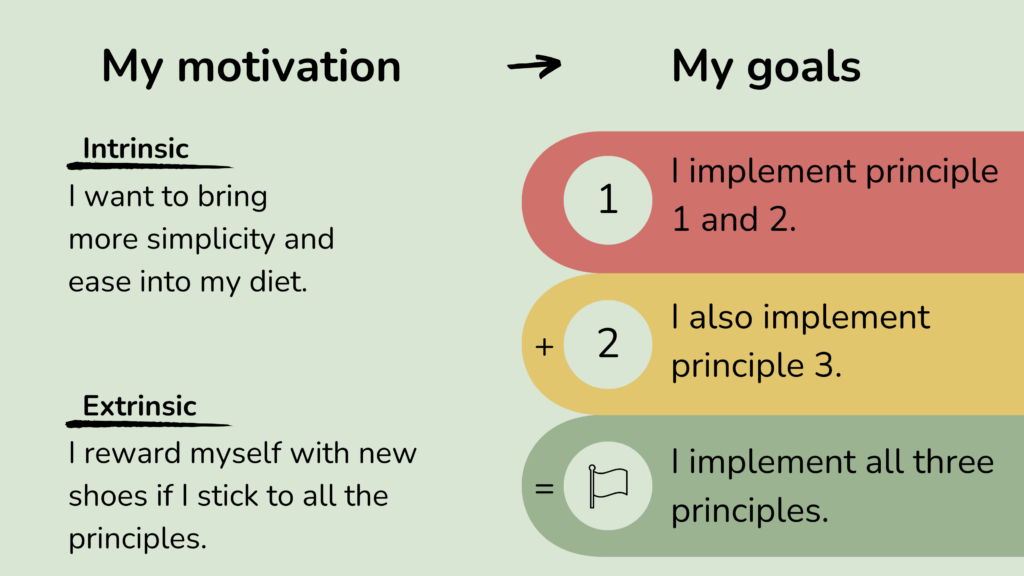
- Motivation plays a central role in dietary changes, as it is the driving force for the first step of action. It can be intrinsic or extrinsic.
- Clear and specific goals are crucial to recognize progress and avoid frustration.
- Intermediate goals can be helpful to prevent overwhelm.
We all use the term “motivation” almost daily. Whether we cite a lack of motivation as the reason for postponed tasks or wish for it to be truly productive. In our society, motivation is equated with willingness to perform. Additionally, the term encompasses determination, diligence, and perseverance to achieve a specific goal. When it comes to the goal of changing one’s diet, motivation plays a central role. It is the driving force behind the first step of action. So, if you have decided to adjust your diet according to Neatic principles, you need motivation to start.
Motivation can be divided into intrinsic and extrinsic motivation.
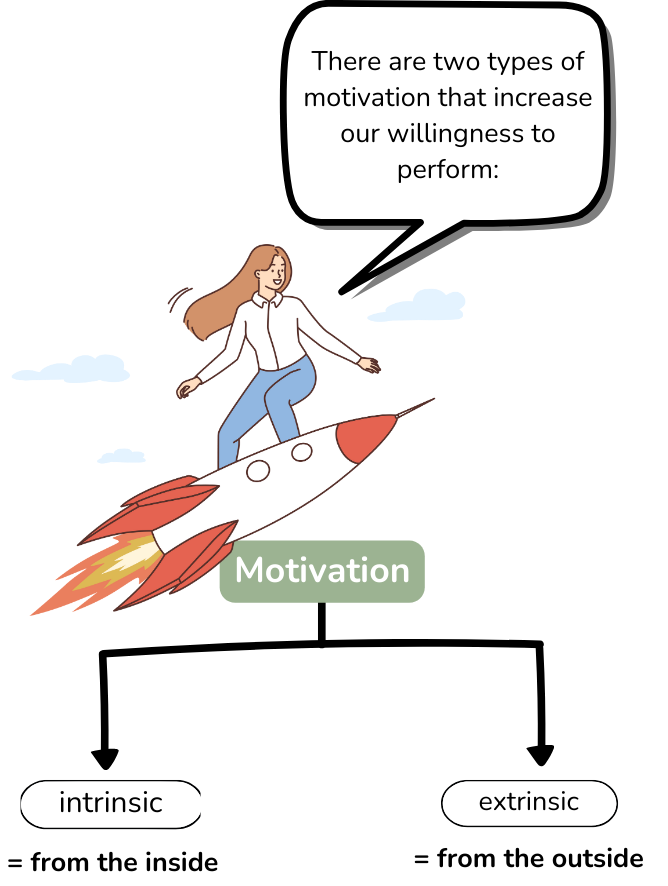
With intrinsic motivation, the incentive lies within the task itself, meaning you are motivated solely by your endeavor. In dietary changes, this could be the joy of trying new recipes, like homemade coconut bars or a date chocolate spread. Experiences also play an important role here. For instance, if you’re tired of diet consuming most of your energy and nerves, the desire for something new that brings more ease and relaxation to your eating habits can be motivating.
With extrinsic motivation, your willingness to perform depends on external incentives. These include rewards and recognition. In dietary changes, this could be compliments from others or rewarding yourself with a concert visit or new shoes upon reaching a goal.
Foods that do not align with Neatic principles should not serve as rewards, as this makes dietary changes more challenging.
For a dietary change with Neatic, both types of motivation are crucial. Intrinsic motivation ensures perseverance and enjoyment of the process, while extrinsic motivation creates additional incentives and celebrates successes. A balanced mix can ease your journey with Neatic and provide long-term motivation.
Goal setting
Motivation and goal setting go hand in hand. Formulating a goal can help you keep in mind what you want to achieve. The clearer a goal is formulated, the better. Clear goal setting provides direction and focus. An unclear goal, like “I want to eat healthier,” can lead to frustration and ineffective approaches, as it’s difficult to recognize progress. Set realistic goals that don’t overwhelm you. Consider whether it makes sense to break your main goals into intermediate goals. Your main goal might be to implement all three Neatic principles. If you can achieve this goal, that’s great. However, if implementing all three principles feels overwhelming, an intermediate goal can help. Your intermediate goal could be to first learn to identify added flavors (principle No. 1) and sweeteners (principle No. 2) in your foods and then avoid them. Once you’re comfortable with this and confident in your food choices, you can take the second step and limit your sugar intake (principle No. 3) and track it.
This way, you can reach your main goal in two steps.
Neatic recommends starting with all three principles simultaneously.
Please do not start with Neatic principle No. 3. This can lead you to replace sugary foods with those containing sweeteners, requiring more effort than necessary.
To keep your goals in sight, you can write them down and place them somewhere you’ll frequently see, or take a photo and use it as your smartphone background. Reflect on your goals regularly and consider whether you’ve achieved them or reverted to old habits.