

Major points:
- Food waste often results from impulsive shopping, improper storage, and lack of planning.
- Measures like targeted shopping planning, correct storage, and creative use of leftovers help prevent waste.
- Initiatives like food sharing and understanding expiration dates also contribute to reducing food waste.
Food waste occurs frequently and affects private households as well. According to a survey by the Federal Statistical Office for the year 2020, there are 78 kilograms of food waste per capita per year. Some of this is avoidable. In this post, you will learn some practical tips that can help you reduce your food waste.

1. Raise awareness
Inform yourself about why conscious and resource-saving handling of food is sensible. Then consider your personal motivations for doing something against food waste. These can include saving money, doing something good for the environment, and producing less (organic) waste.
Understand the term expiration date: Foods with an expiration date (recognizable on the packaging: to be consumed by…) must not be consumed after the date has passed, as they can then be harmful to health. These include ground meat, poultry, raw milk, or smoked fish. Spoilage in these foods is not always visible or detectable by taste. Therefore, you should not consume foods after the expiration date.
Understand the term best-before date: The best-before date (BBD; recognizable on the packaging: best before…) indicates the date until which a packaged food can be stored and safely consumed. With proper storage, the food retains its properties such as texture, color, smell, taste, consistency, and nutritional value. Often, these foods can still be safely consumed well beyond the BBD. Especially dry foods like rice and pasta, but also canned goods and even dairy products, are often significantly longer-lasting. By seeing, smelling, and tasting, you can determine whether the food can still be eaten.
2. Plan your meals and shopping
- Plan meals: Plan your meals for the week in advance. This way, you only buy what you actually need and can better account for leftovers.
- Create shopping lists: Before you go shopping, make a list of the needed foods and stick to it. This helps avoid impulse purchases that are often not fully used.
- Pay attention to perishable foods: Raw meat, poultry, and fish must be used quickly, as they can become harmful if improperly stored. Fruits and vegetables can also lose freshness or spoil quickly, depending on the type and storage. Dry products like rice, pasta, and canned goods, on the other hand, remain durable over long periods with proper storage.
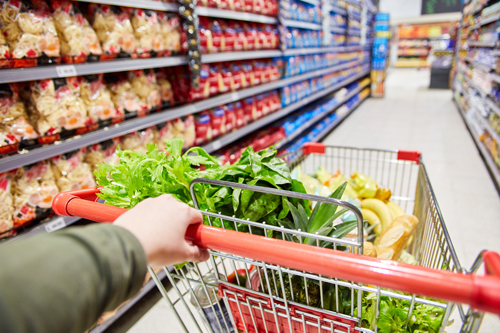
3. Store and organize your food properly
- Ensure proper storage: Store foods correctly to extend their shelf life or reach the stated BBD. Use a cooler bag for purchasing chilled and frozen foods to maintain the cold chain from the store. Promptly place these products in the freezer or refrigerator. Transfer opened products into suitable, sealable containers and use clips or rubber bands. If you have a vacuum sealer, you can use it to package foods and keep them fresh longer.
- Defrost the freezer: Especially older models often form so-called ice layers. These not only take up space in the freezer but also reduce cooling efficiency. If the freezer compensates, energy costs rise. If the appliance can no longer maintain adequate cooling, it negatively affects the shelf life of the foods.
- Use the first-in-first-out principle: Place older foods at the front and newly purchased ones at the back. This way, you consume the older products first.
- Organize your refrigerator: There are tips on how to properly arrange your refrigerator to store foods at the right temperatures. This also helps you keep track of your supplies.
4. Freeze and preserve
- Freeze foods: Many foods like fruits, vegetables, meat, fish, and even prepared dishes can be frozen well if you cannot use them immediately. This keeps them fresh longer, and you always have a reserve.
- Preserve foods: Foods can be made longer-lasting through various preservation methods like canning, salting, drying, or sugaring. Jams, chutneys, or pickled cucumbers are tasty ways to use surpluses. Soups or sauces can also be filled hot into clean screw-top jars and, if processed and stored correctly, last for months. Remember to label your jars with the name, possibly the ingredients, and the date of production. If you find an older jar, use your senses to test it. By seeing, smelling, and tasting, you can determine whether your preserved foods are still good. Here too: With proper storage, foods often last longer.
5. Cook and eat consciously
- Use your leftovers creatively: Be creative with leftovers and plan dishes that are suitable for using up remaining foods, like stews, casseroles, wraps, or smoothies. Dishes like French toast, bread salad, or spreads are also good options for using leftovers. You can also invent entirely new dishes. Your creativity has no limits.
- Adjust portions: Cook as much as you need. You can also cook for several days in advance. If leftovers remain, freeze portions for days when you have no time or desire to cook.
- Listen to your hunger: When dining out, you usually cannot or can only partially determine the portion size. If the meal is too much for you, have it packed up or bring your own container to avoid additional packaging waste. Fries and even burgers from the previous day can be crisped up again in the air fryer. Especially a buffet can tempt you to take more on your plate than you are hungry for. It is better to go to the buffet more often and serve yourself according to your hunger.
- Use all parts: Vegetables like potatoes, carrots, or cucumbers do not necessarily need to be peeled and can be eaten with the skin. In stews or vegetable stir-fries, it is usually not noticeable if the skin is still on. In potato gratin, the potato skin not only enhances the appearance but also improves the taste. The stems of cauliflower and broccoli are edible, and the leaves of carrots, kohlrabi, or radishes can complement your salad or be processed into pesto. By consuming as much of your food as possible, you not only reduce waste but also increase your intake of vitamins and fiber.
- Take on the use-it-up challenge: If you have a large stock of food, it can happen that you struggle to use everything in time. A use-it-up challenge might be just the right approach for you. Gather all foods that have a short best-before date or are already past it but still seem fine. Place them in a visible box or a dedicated drawer that you check when cooking. See how long it takes to use everything up. There are no limits to your creativity!

6. Rescue and reuse
- Support your supermarket in the fight against food waste: Many supermarkets have a section with discounted products nearing their best-before date. If you already planned to eat yogurt in the coming days, this is a great way to help reduce waste while saving money—without compromising on quality. However, be careful not to buy more than you can consume. Additionally, fruits and vegetables that grow in irregular shapes or have small blemishes are often left on the shelf, even though they taste just as good as the “perfect-looking” ones.
- Food sharing: Many cities have food-sharing initiatives aimed at rescuing surplus food and distributing it for free.
- Food banks: If you have a low income, you can register with a local food bank. Eligibility varies by location, so it is worth inquiring. People receiving student financial aid or small pensions are often eligible to receive food from food banks.
- Online platforms: Various companies sell surplus products at reduced prices to prevent them from going to waste. Often, these are items with a short best-before date, overproduction, packaging defects, or non-standard fruits and vegetables. Many platforms allow you to choose which foods you want, helping you save money. Companies like Etepetete sell rescued organic fruits and vegetables that do not meet commercial aesthetic standards and would otherwise be discarded.
- Day-old stores: These stores sell baked goods from the previous day, such as bread, rolls, or pastries, at up to 50% off. Some even have vending machines outside where you can purchase leftover goods. In many bakeries, you can ask for day-old products at a discount. The quality does not necessarily decrease—after all, the fresh bread from yesterday is today’s day-old bread and often still tastes excellent.
- Give away excess food: If you have more food than you can eat or simply do not like something, give it to your neighbors, friends, or family, or bring it to a local food distribution point.
- Compost waste: Some food waste is unavoidable. If possible, compost organic waste like potato peels, onion skins, and apple cores.
What does Neatic recommend concerning food waste?
There are many ways to tackle food waste in your daily life.
If you follow the Neatic principles, you are on the safe side when it comes to fresh fruits and vegetables. Stay mindful when embarking on food rescue missions. With surprise food boxes, you do not have control over what is included, meaning products with added flavors, sweeteners, and sugar may be in the mix. For baked goods, ingredient lists are often missing, giving you little opportunity to check their composition. Here too, added flavors and sugar are commonly present.
Hopefully, you found some inspiration and useful takeaways. These tips not only help reduce food waste but also save you money!
Well-organised Meal Prep can also help to reduce food waste.